Category Archives: Philosophy of Religion

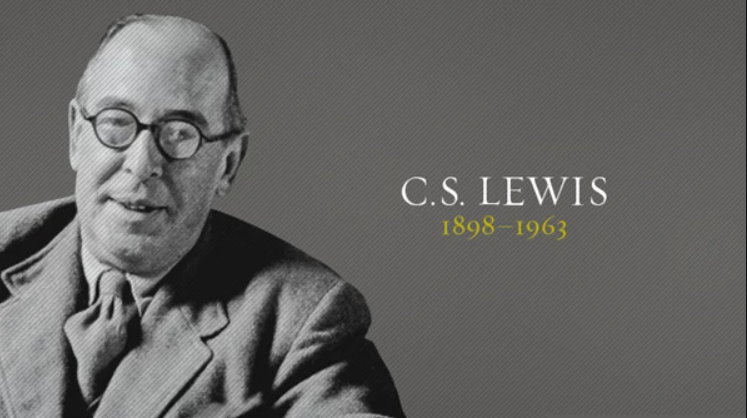
The Four Loves by C.S. Lewis – Introduction

C.S. Lewis wrote a fascinating and truly insightful philosophical treatise into the four key forms or versions of what we in the English-speaking world would simply refer to as ‘Love.’ He did this by drawing upon the vast richness of the literary world, especially those tales woven during the Middle Ages and Early Modern Period. Lewis begins by differentiating between two potential functions of love: Gift love and Need love. In what follows, I’ll provide a multi-segmented summary of Lewis’s treatment of Love from a philosophical perspective.

Continue reading

Commentary: Looking for the Purpose of Life by Brian King

*The original article can be found at: https://philosophynow.org/issues/147/Looking_for_the_Purpose_of_Life

Brian King writes a solid introductory piece about what the purpose of life may be and why it is such a thorny question for philosophers to answer.

*Video below unrelated, but still entertaining and quasi-relevant!*

Continue reading

A Historical Primer on Polygamous Marriage

    45b Capture

The history of polygamy is a rich and varied one. Dating back to 3000 BCE and continuing today, spanning the world from Asia to Europe, from Africa and the Middle East to North America. The ancient patriarchs of the Hebrews such as Abraham, Esau, and Jacob were the heads of polygamous households. Similarly, under Shari’ah Law in Islam, a man is allowed to marry up to four women so long as he treats them in an egalitarian manner. Even the father of early modern Protestantism, Martin Luther, admitted that Christianity and polygamy were not mutually exclusive ideals, noting that the practice did not contradict anything in the Holy Bible (Swisher 3-4). As a result, it is fair to say that there is a globally attested and historical tradition of polygamy and that it has been defended over time as a viable form of marriage.

Continue reading

The Incompatible Properties Argument(s) by T.M. Drange

[This article was originally published by Dr. Theodore Drange in Philo 1998 (2), pp. 49-60. It has been re-purposed here, eliminating most of Drange’s accompanying comments to anticipated objections. The intention here is just to provide the outlines of his argument(s) in their logical form(s) and promote awareness of the argument’s overall strength.]

Capture

Atheological arguments (arguments for the nonexistence of God) can be divided into two main groups. One group consists of arguments which aim to show an incompatibility between two of God’s properties. Let us call those “incompatible-properties arguments.” The other group consists of arguments which aim to show an incompatibility between God’s existence and the nature of the world. They may be called “God-vs.-world arguments.” A prime example of one of those would be the Evidential Argument from Evil. This paper will only survey arguments in the first group. Arguments in the second group are discussed elsewhere.[1]

To generate incompatible-properties arguments, it would be most helpful to have a list of divine attributes. I suggest the following. God is:

(a) perfect                       (g) personal

(b) immutable                (h) free

(c) transcendent            (i) all-loving

(d) nonphysical              (j) all-just

(e) omniscient                (k) all-merciful

(f) omnipresent              (l) the creator of the universe

Continue reading